
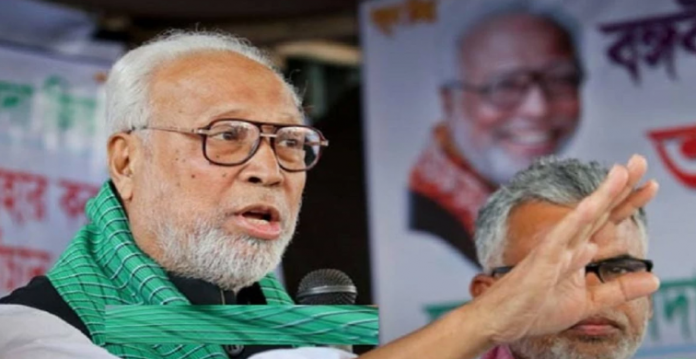
Kader Siddique, leader of the Krishak Sramik Janata League, recently expressed his profound grief over the arson attack on Bangabandhu Sheikh Mujibur Rahman’s historic residence at Dhanmondi 32, stating that he would have preferred to die rather than witness the destruction of such a significant site. This statement was made in front of journalists at the damaged site, where Siddique lamented the loss of a symbol of national heritage and leadership. He distinguished between the legacies of Bangabandhu and current political figures, noting that while Bangabandhu remains a revered figure as the Father of the Nation and a champion of independence, the current political climate and leadership do not bear the same respect or integrity.
Siddique’s comments came amid a broader context of political unrest and change within Bangladesh, following a successful student-led anti-discrimination movement. He acknowledged the courage and sacrifice of the students whose efforts have reshaped the political landscape, leading to significant changes including the resignation of key leaders and a shift towards an interim government. He expressed his hopes for a peaceful future under the new leadership of Professor Muhammad Yunus, who has been appointed to head the interim government, urging him to return from Paris to take active charge and restore peace and order in Bangladesh.
In his emotional discourse, Siddique also extended his congratulations to the students for their role in the political transformation, urging them to continue their efforts in safeguarding democracy and maintaining peace. He stressed the importance of protecting minority rights and preventing injustices, highlighting the collective responsibility to uphold the dignity and unity of Bangladesh. Reflecting on the legacy of Bangabandhu, Siddique emphasized the enduring respect and love the nation holds for him, contrasting it with the transient nature of current political turmoil. He reassured that the political upheavals would not lead to catastrophic consequences but would be a temporary challenge for the nation.
Overall, Siddique’s statements underscore a poignant moment of reflection on Bangladesh’s political heritage and the ongoing struggle for justice and equity, framed by the backdrop of Bangabandhu’s enduring legacy and the transformative power of youth-led activism.