
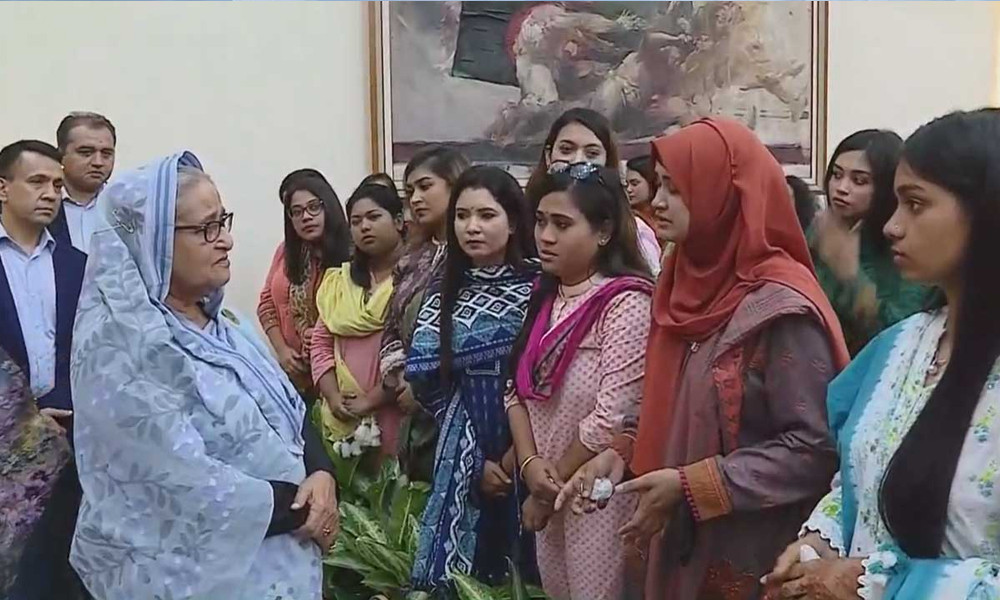
On the afternoon of July 29, 2024, a poignant meeting took place at the Ganabhaban, the official residence of the Prime Minister of Bangladesh, where female leaders from the Bangladesh Chhatra League shared their harrowing experiences with Prime Minister Sheikh Hasina. These leaders, hailing from Dhaka University and various other colleges in the capital, were involved in the recent quota reform movement, which had seen significant unrest.
The meeting was set against the backdrop of recent demonstrations that called for comprehensive reforms to the existing quota system in government jobs, a movement that has seen widespread participation from students across the nation. During these protests, reports of harassment and physical violence surfaced, with female participants being disproportionately affected.
The female student leaders detailed specific incidents of violence and abuse they endured during the protests. Their accounts highlighted not only the physical assaults but also the psychological trauma associated with such experiences. Many of the leaders could not hold back tears as they relayed their experiences directly to the Prime Minister.
Prime Minister Sheikh Hasina listened intently to these testimonies, which illustrated the gravity of the situation and the urgent need for measures to ensure the safety and dignity of student protesters, particularly women. The meeting underscored the government’s responsibility to protect its citizens and foster a safe environment for peaceful protests.
The emotional testimonials also spurred discussions on the broader implications of the quota reform movement and the state’s response to public demonstrations. The Prime Minister assured the student leaders of her commitment to addressing their concerns and ensuring that justice is served for those who were mistreated.
This meeting was a crucial step in acknowledging the issues faced by student activists and the need for a systematic review of both the quota system and the mechanisms for maintaining law and order during public demonstrations. It also highlighted the particular vulnerabilities faced by women in protests and the imperative to adopt gender-sensitive approaches in managing and responding to civil unrest.
Overall, the session at Ganabhaban was not just about recounting the difficulties faced during the quota reform protests; it was also a significant moment for the government to reaffirm its stance on protecting human rights and supporting the youth in their quest for equitable and just reforms. The outcomes of this meeting are awaited with the hope that they will lead to meaningful changes in policy and practice, ensuring such grievances are addressed promptly and effectively in the future.
A news by Alisha Pradhan, General Secretary, HerNet Foundation