
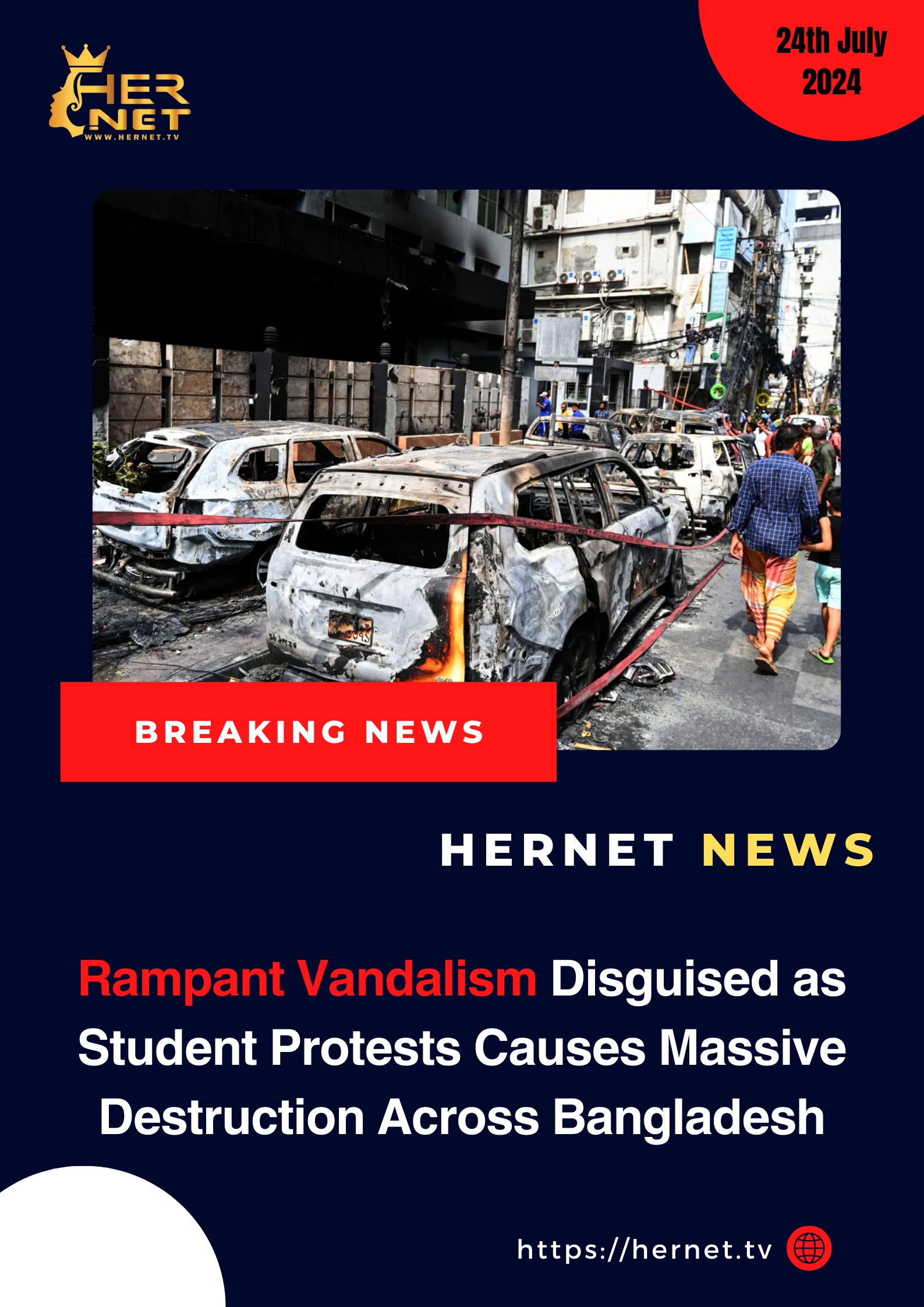
In a harrowing display of destruction, what began as student-led protests demanding reform in Bangladesh’s government job quota system spiraled into a violent spree of vandalism, with political opportunists exacerbating the unrest. Over five tumultuous days, the nation witnessed unprecedented damage to public property and infrastructure, leading to financial losses estimated at around 1,500 crore taka.
The protests, originally aimed at rectifying the allocation of government jobs, were quickly overshadowed by chaos as members from opposition political parties infiltrated the ranks of demonstrators. This resulted in a destructive force that saw the demolition of newly established metro rail systems, toll plazas, and numerous government buildings across major cities, including Dhaka, Chittagong, and Rajshahi.
The escalation of violence prompted the government to impose a stringent curfew, an attempt to quell the unrest that unfortunately came too late for many of the national assets already laid to waste. The metro rail, a symbol of national progress and a critical infrastructure project anticipated to ease urban congestion, faced severe damages that not only set back its completion date but also multiplied its costs manifold.
Criticism has mounted against the political entities that covertly encouraged the upheaval. These groups, accused of leveraging genuine student grievances for their own agendas, have significantly undermined the protest’s legitimacy. Their involvement transformed a potentially peaceful and impactful civic movement into a riotous debacle, stripping the students’ cause of its integrity.
The repercussions of this vandalism extend beyond immediate financial strains; they signify a substantial setback to national development and public trust. Repairing and replacing the damaged properties will divert funds from essential public services and development projects, further straining the country’s budget. Additionally, the societal impact is profound, as citizens grapple with the interruption of services and the general decline in public safety.
The government’s response, while decisive, has opened up a discourse on the effectiveness of crisis management and the need for strategies that prevent political exploitation of civic movements. As Bangladesh recuperates from these events, the call for a balanced and fair approach to protest rights versus public safety has never been more critical.
This episode serves as a stark reminder of the fine line between protest and pandemonium. It underscores the necessity for vigilance against political manipulation of student movements and the importance of safeguarding national assets that serve the broader populace. As the dust settles, the hope remains that such disruptions will pave the way for more structured dialogue and genuine reforms without recourse to violence or destruction.