
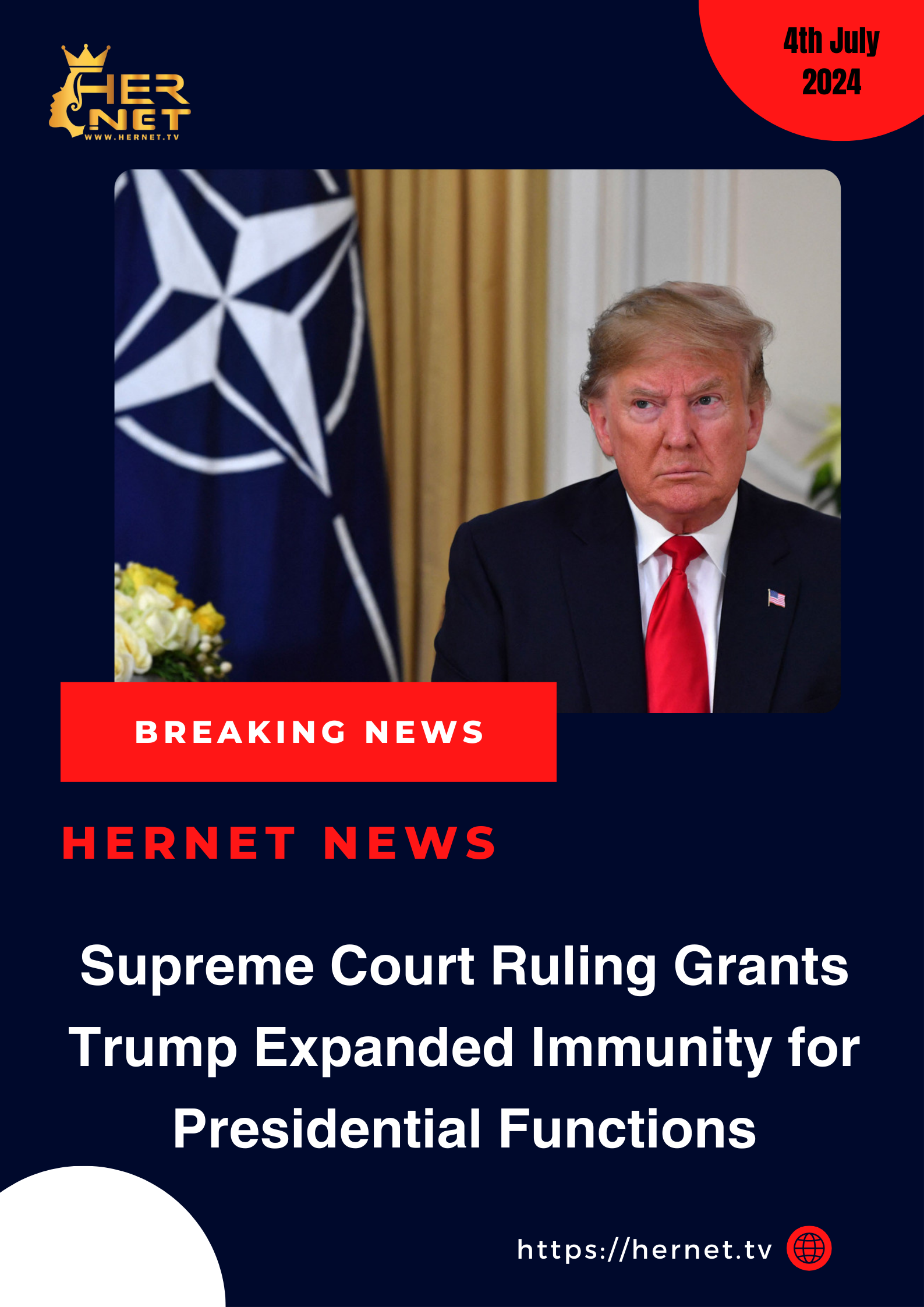
In a landmark decision that could reshape the landscape of presidential accountability, the U.S. Supreme Court has ruled that presidents have absolute immunity from criminal prosecution for actions deemed “core executive functions.” This ruling significantly impacts the potential legal landscape surrounding former President Donald Trump, especially regarding actions taken during his tenure related to the Justice Department and executive decision-making.
The decision emerged from long-standing debates about presidential power and accountability, intensified by Robert Mueller’s investigation into Trump’s potential obstruction of justice. Mueller, who had probed Trump’s attempts to disrupt the investigation into Russian interference in the 2016 election, suggested in 2019 that Trump could face charges after leaving office. However, the recent Supreme Court ruling challenges this possibility by granting presidents expansive immunity for actions within their official capacity, including interactions that could influence justice department operations.
Chief Justice John Roberts, representing the conservative majority, argued that this level of immunity was necessary to prevent the executive branch from being unduly hampered by potential legal actions once a president leaves office. According to Roberts, such immunity is crucial for enabling presidents to perform their duties without fear of future prosecution, preserving the constitutional separation of powers.
However, this ruling also opens the door for a president to engage in actions that could previously be deemed criminal if they fall within the scope of their constitutional duties, like issuing pardons or managing national security measures. It explicitly prevents Congress and the courts from questioning the motives behind any actions categorized as core presidential functions.
Justice Sonya Sotomayor’s dissent warns of the dangers this decision poses to the principle of equal justice under the law. She argues that it effectively places presidents above the law, contrary to the doctrines that underpin American democracy, by making it nearly impossible to hold them accountable for misuse of power if such actions are considered part of their official role.
This ruling not only impacts Trump’s past actions but also sets a precedent that could affect how future presidents operate within their official capacities. It potentially grants them broader leeway to act without fear of judicial repercussions, fundamentally altering the balance of accountability within the federal government.