
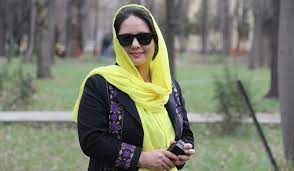
In a remarkable journey shaped by resilience and determination, Afghan journalist Zahra Joya continues her mission of reporting on the lives of Afghan women and the pressing issues they face, despite having to flee her homeland when the Taliban regained power.
Zahra Joya, now 29, was forced to live as a boy named Mohammad during the Taliban’s previous rule, a disguise that allowed her to defy the extremist group’s ban on girls attending school. This unconventional upbringing not only provided her with an education but also offered a glimpse into the freedoms that were denied to most Afghan girls.
As a passionate feminist, Joya founded Rukhshana Media last year, a news agency dedicated to covering the lives of Afghan women, shedding light on their struggles with economic hardship and violence. However, the recent Taliban takeover of Afghanistan forced her to flee the country.
Currently residing in a London hotel, located just a short distance from the iconic Tower of London, Joya remains steadfast in her commitment to journalism. From her hotel room, 5,800 kilometers (3,600 miles) away from Afghanistan, she continues to report on unfolding events, relying on the dedication of six covertly operating female journalists and her network of contacts.
Joya emphasizes the significance of their work, especially considering the grim reality that has unfolded since the Taliban’s return to power. More than 150 media outlets in Afghanistan have shuttered since August, and most women journalists have ceased their work.
“Afghanistan is the only country where half the population don’t have basic rights. It’s crucial we show what’s happening,” says Joya, who is set to address the Thomson Reuters Foundation’s annual event, Trust Conference.
During the Taliban’s previous rule from 1996 to 2001, they imposed strict bans on women working and enforced harsh restrictions on their lives, often resorting to brutal punishments for those who defied these edicts.
This time, the Taliban has claimed that girls and women will be permitted to study and work in accordance with Islamic law, but the specifics remain unclear. The reality on the ground still sees most women and high school girls confined to their homes.
Joya recognizes the role of technology and social media in helping journalists monitor the Taliban’s actions, but she also highlights the extremist group’s use of these platforms for propaganda and incitement of hatred.
Hailing from the predominantly Shi’ite Hazara community, which has frequently been targeted by militant groups, including the Taliban and Islamic State, Joya acknowledges the challenges she faces as a woman, journalist, and Hazara.
Last year, Joya established Rukhshana Media with her own savings, providing Afghan women journalists with a platform to address issues that mainstream media often neglects, such as sexual harassment, child marriage, and economic empowerment. She remarks that male journalists often determine what is newsworthy in Afghanistan, overlooking the importance of women’s stories.
In August, Joya initiated a $20,000 appeal to sustain Rukhshana Media. Astonishingly, the appeal garnered $300,000 in donations from around the world within weeks. She has expanded the agency by launching an English-language service and plans to hire additional reporters across Afghanistan.
Joya’s media agency is named after Rukhshana, a young woman stoned to death in 2015 after fleeing a forced marriage. This tragic incident serves as a grim reminder of the pervasive misogyny and violence that permeates Afghan society.
Reflecting on her unconventional upbringing, Joya describes the deep societal wounds caused by the devaluation of girls in Afghanistan, where the birth of a girl is not celebrated as it is for boys.
Despite her challenging journey, Joya remains determined to use her computer as her “weapon” to stand up against the Taliban. When confronted with the harrowing stories she encounters daily, she finds solace in playing with her one-year-old niece, Ellaha.
“I’m very happy she’s growing up in a country that knows the value of girls,” Joya says, holding onto hope for a brighter future for Afghan women and girls, even from her London hotel room.